

Champions Group just became a permanent competitor. Here’s why that changes your acquisition math — and why it might not matter as much as you think.
You’ve probably heard this before: “Private equity will overpay, load up the debt, then flip in five years. Just wait them out.”
That was good advice when it was true. It’s less true now.
In February 2026, Blackstone acquired Champions Group — one of the largest residential HVAC and home services platforms in the country — through a vehicle that doesn’t flip. It holds. Forever. That changes the competitive math in every market Champions Group operates in, and eventually in markets they’re targeting.
But before you panic, let’s walk through exactly what happened, what it actually means on the ground, and why individual buyers still have real advantages that Blackstone’s capital can’t buy.
What Actually Happened with the Champions Group Deal
The numbers are significant. Blackstone acquired Champions Group in February 2026 at a reported enterprise value of approximately $2.5 billion — roughly 18.5x EBITDA. That’s a premium multiple even by HVAC PE standards, where recent transactions have clustered in the 8–12x range for quality platforms.
The deal structure is worth understanding:
- BXPE — Blackstone’s perpetual capital vehicle — led the acquisition
- Odyssey Investment Partners retained a minority equity stake alongside management
- Financing included over $1 billion in private credit, arranged through direct lenders rather than traditional leveraged loan markets
- Champions Group’s management team stayed in place and retained ownership stakes
Champions Group brings serious operational scale to this deal. The platform operates across Arizona, Texas, Florida, and California — four of the fastest-growing residential markets in the country. They employ over 1,800 technicians. They run an active add-on acquisition program, buying smaller regional operators to bolt onto the platform.
That last point matters more than the headline price. Their acquisition engine doesn’t stop because they got acquired. It accelerates.
Sources: Blackstone press release on the Champions Group acquisition | Capstone Partners April 2026 HVAC Equipment M&A Update
What Perpetual Capital Means (In English)
Most private equity funds work on a simple clock. A fund raises money from institutional investors — pension funds, endowments, family offices. It deploys that capital into acquisitions over three to five years. Then it has another five to seven years to grow those companies and exit them. After roughly a decade, the fund winds down, returns capital to investors, and closes.
That exit clock creates pressure. PE firms have to sell. That pressure eventually benefits sellers and creates market disruptions that savvy buyers can exploit — a topic covered in more depth in the PE platform flip dynamic with Sila Services.
Perpetual capital removes the exit clock entirely.
Here’s how BXPE works differently:
- Investors can contribute and redeem over time, but there’s no fund wind-down date
- The fund generates returns through dividends, earnings growth, and appreciation — not through selling portfolio companies on a schedule
- Portfolio companies can be held for 20 years, or indefinitely, if returns justify it
- There’s no forced sale event, no fund expiration creating urgency to exit
Think of it like the difference between renting a house and owning it. Traditional PE rents for seven years and has to leave. Perpetual capital bought the house and isn’t going anywhere.
For Champions Group specifically: Blackstone has no financial pressure to sell. They can invest in the platform, absorb short-term losses on acquisitions, price aggressively to gain share, and wait out market cycles — because they have no exit timeline forcing their hand.
Why This Is Different from Every Other PE Deal in HVAC
The HVAC industry has seen significant PE activity over the past decade, but most of it followed the traditional playbook. Buy a platform, bolt on 10–15 smaller operators, hit scale, flip to a strategic buyer or another PE fund at a higher multiple.
That playbook creates predictable disruption and predictable opportunity. The PE platform exit thesis has been well-documented — firms like Sila Services were acquired by Morgan Stanley Infrastructure, then sold to Goldman Sachs. Each transition creates integration friction, management turnover, and sometimes divested locations that become available to individual buyers.
BXPE changes that pattern for Champions Group.
The old playbook:
- Acquire platform at 10x EBITDA
- Add 15 bolt-ons at 4–6x
- Grow EBITDA, expand multiple
- Sell at 14x to a strategic buyer in year 6
- Fund closes, some locations get rationalized
The BXPE playbook:
- Acquire platform at 18.5x EBITDA
- Add bolt-ons continuously, no timeline pressure
- Invest in technology, training, brand
- Hold indefinitely, compound returns
- No forced sale event — ever
Other large HVAC platforms are still on traditional fund timelines. ARS/Rescue Rooter, Total Home, Sears Home Services — these have ownership structures that will eventually require exits. Champions Group, under BXPE, does not.
The Capstone Partners April 2026 HVAC M&A Update noted that perpetual and long-dated vehicles are increasingly attractive for “sticky” service businesses with recurring revenue — exactly the profile Champions Group fits.
According to Axial’s HVAC M&A Trends 2026, platforms with perpetual backing are bidding more aggressively on bolt-on acquisitions precisely because they don’t need to engineer a quick multiple expansion.
What This Means for Your Local Market
Let’s get practical. Champions Group operates in Arizona, Texas, Florida, and California. If you’re looking at an acquisition in Phoenix, Dallas, Tampa, or Sacramento, they are a permanent presence in your market.
Here’s what that looks like on the ground:
If Champions Group is already in your target market:
- They are not selling their locations in a distressed exit you can pick up cheaply
- Their add-on program means they are actively looking at the same acquisition targets you are
- They can pay more than you can for a bolt-on — and hold it without pressure to immediately improve margins
- Their brand presence will grow over time, not diminish
If Champions Group is not yet in your target market:
- They have the capital and incentive to expand
- Smaller markets with strong demographic growth are likely targets
- Don’t assume geographic distance is permanent protection
Their bolt-on acquisition model is worth understanding:
Champions Group buys smaller regional operators — typically in the $3M–$15M revenue range — and integrates them into the platform. They offer sellers a clean exit, a management team that stays employed, and a continuation of operations. For sellers who want to exit cleanly, it’s a competitive offer.
You may find yourself bidding against Champions Group for the same business. Their offer will often be higher on headline price. But there are factors they can’t offer — and we’ll get to those.
The CT Acquisitions PE HVAC 2026 tracker shows Champions Group completed 12 bolt-on acquisitions in 2025 alone. Under perpetual capital, that pace isn’t slowing down.
The Individual Buyer’s Enduring Advantages
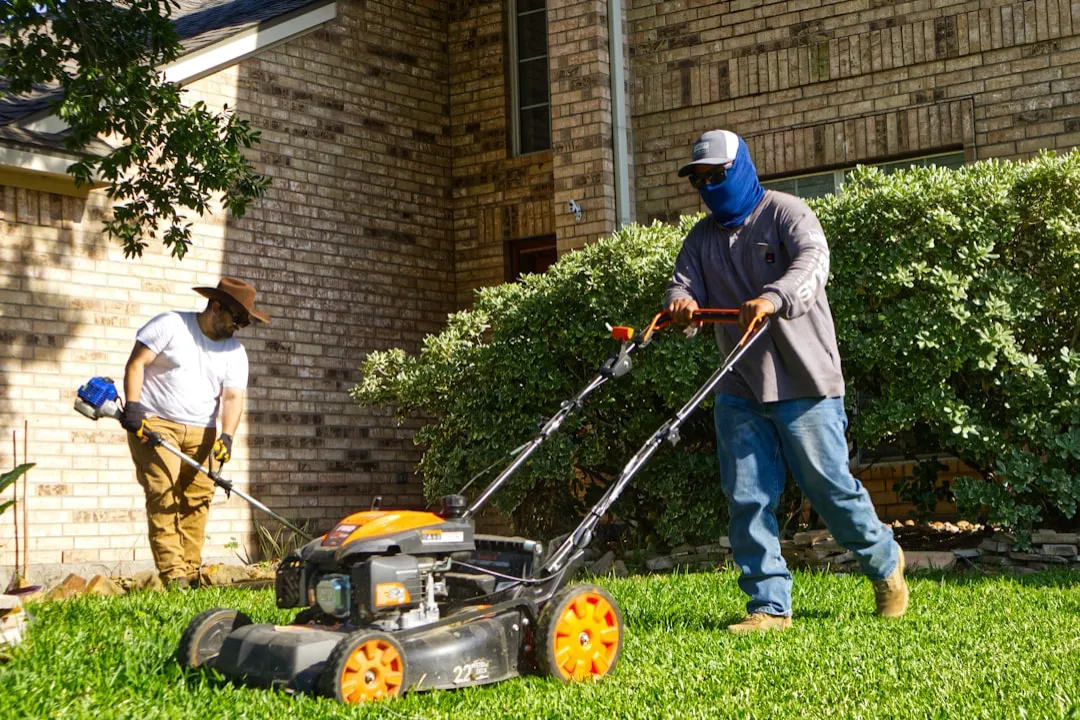
Here’s what Blackstone can’t buy.
You live there. Champions Group’s Phoenix division is run by a regional manager who may have relocated from Dallas. You’ve lived in your market for 20 years. You know which neighborhoods have older equipment. You know the HOA managers, the property management companies, the GCs. That network took decades to build and it doesn’t transfer with a purchase agreement.
You answer the phone at 2 AM. Not a call center. Not an after-hours answering service that patches through to an on-call dispatcher. You. That level of ownership and responsiveness is a genuine differentiator for residential customers who need service — not the brand promise on a wrapped van.
Customers know your name. When Smith Heating & Cooling gets acquired by a regional PE platform, it becomes Location #47. The tech who shows up isn’t Mike Smith’s guy anymore. It’s a technician wearing Champions Group gear who couldn’t tell you Mike’s name if you asked. For customers who value relationship continuity, that transition is a vulnerability that a capable independent buyer can exploit.
You hire from the community. PE platforms have to recruit technicians through centralized HR processes, sign-on bonuses, and compensation packages designed for scale. You can hire the kid who grew up on the same street you did. That’s not a small thing in an industry with chronic technician shortages.
You can be selective about customers. A PE platform running 1,800 technicians across four states needs volume. They need to run high call counts to justify their cost structure. An individual owner with 8 trucks can be deliberately selective — building a customer base of high-value relationships rather than maximizing ticket count.
The Kroll residential HVAC services M&A report makes this point clearly: scale creates operational efficiency but undermines service intimacy. Individual operators who lean into intimacy, rather than trying to out-scale PE, consistently outperform on customer retention and referral metrics.
This is explored further in competing with PE-backed HVAC chains — the playbook for independent operators who are winning despite PE consolidation.
How to Compete When Your Competitor Never Leaves
Adjust your strategy for a permanent landscape, not a temporary incursion.
Target deal sizes PE won’t touch.
Champions Group’s add-on program is looking for $3M+ revenue businesses. Deals under $1M in SDE are too small to move the needle for a platform their size. The sub-$1.5M deal market gives individual buyers real negotiation leverage precisely because the competition for these deals is thinner.
A two-truck shop doing $800K in revenue is exactly the kind of business a retiring owner wants to sell to someone local. Champions Group isn’t going to compete for it. Their deal team won’t return the broker’s call.
Build the community relationships PE can’t replicate.
This is about deliberate investment, not organic accident:
- Join the local trade association and show up consistently
- Sponsor the youth sports league in your service area
- Be the HVAC company that shows up at the chamber of commerce
- Hire locally and let your employees become brand ambassadors in the community
- Develop a referral relationship with two or three local real estate agents
None of these cost significant money. All of them create a competitive moat that a regional manager at a PE platform can’t build on a quarterly basis.
Make your membership program personal.
A well-executed maintenance agreement program is the clearest sustainable advantage an independent operator has over a PE platform. The numbers are compelling — post-acquisition membership programs consistently drive 20–35% revenue increases in year two — but the real advantage is the relationship.
When you call your maintenance agreement customers personally before the busy season, that call lands differently than a robocall from Champions Group’s CRM. When a customer knows that the membership they’re paying for means the actual owner is their point of contact, that’s retention money can’t directly buy.
Understand your market’s PE exposure before you buy.
Before you put an LOI on a business, know whether Champions Group or another PE platform operates in that market. Not to avoid them — but to understand the competitive dynamics you’re walking into. A market with heavy PE presence may require a clearer differentiation strategy. A market without PE presence is a different opportunity.
The $5 trillion ownership transfer wave means there is no shortage of acquisition opportunities. You don’t have to fight for a deal in a PE-saturated market. There are 40,000+ HVAC businesses owned by operators over 55, most of them in markets well below Champions Group’s radar.
Frequently Asked Questions
Will Blackstone overpay and destabilize the market for individual buyers?
The 18.5x acquisition multiple is high, but it reflects Champions Group’s scale and recurring revenue profile — not a price any individual buyer is competing against. The bolt-on acquisitions Champions Group makes are typically at much lower multiples (4–7x EBITDA). The headline deal number doesn’t set the market for the businesses you’re actually trying to buy.
Does this mean PE will dominate HVAC permanently?
Probably yes, at the upper end of the market. PE-backed platforms will likely control a growing share of the $50M+ revenue segment. But the residential HVAC industry has over 100,000 small operators, and the economics of local ownership are durable at the sub-$5M revenue level. Consolidation at the top doesn’t eliminate opportunity at the bottom of the market.
Should I avoid markets where Champions Group operates?
Not necessarily. Champions Group’s presence creates customer frustration as well as brand awareness. Every customer who gets a bad experience with a PE platform is a potential loyal customer for an independent operator who treats them better. Their size is a competitive disadvantage in some customer segments.
Can I sell my acquired business to a PE platform eventually?
Yes — and perpetual capital actually improves the long-term exit landscape for individual buyers. Champions Group’s add-on program is permanently active. If you build a quality business, you have a motivated buyer who isn’t operating on a time-limited acquisition window. That’s a better exit environment than the previous PE flip cycle created.
The Bottom Line
Blackstone’s Champions Group acquisition is genuinely different from previous HVAC PE deals. Perpetual capital means permanent presence — no exit clock, no forced sale, no market disruption from a fund wind-down. If you’re building a business in a market they operate in, plan for them to be there indefinitely.
But the word “permanent” cuts both ways. Yes, they’re a permanent competitor. They’re also permanently dependent on centralized management, regional operators, and high-volume efficiency models that sacrifice the relationship quality that wins loyal residential customers.
The HVAC businesses that will struggle are the ones that try to compete like PE platforms — on price, scale, and ad spend. The ones that will thrive are the ones that compete where PE can’t: genuine local ownership, personal accountability, and community relationships that 1,800 technicians managed from a Dallas headquarters can never replicate.
You’re not going to outspend Blackstone. You don’t have to. You just have to be more valuable to a customer who answers a knock on the door from someone they actually know.
That’s still winnable. And it will be, regardless of what the fund documents say about exit timelines.
Related reading: Competing with PE-backed HVAC chains as an independent owner | Why sub-$1.5M deals give individual buyers negotiation leverage | Building a post-acquisition membership program for recurring revenue