

The Question Nobody Asks Until It's Too Late
I've watched more HVAC acquisitions fall apart than I care to count. Not because the business was bad. Not because the financing collapsed. Because the buyer never took twenty minutes to sit down and ask themselves whether they actually wanted what they were buying.
I don't mean the dream version. Everybody wants the dream version — the profitable two-truck operation with a loyal customer base and a shop manager who practically runs the place. I mean the Tuesday-morning-in-February version, when your install crew no-shows, the parts order is wrong, a customer is threatening a BBB complaint over a $387 repair, and your bookkeeper just told you quarterly taxes are due in nine days.
That's the version you need to want. Or at least be willing to endure.
Key point: The single biggest predictor of acquisition success isn't deal price, location, or even the health of the business you're buying. It's whether the buyer has an accurate picture of what they're signing up for. This chapter is designed to give you that picture.
I owned a residential and light commercial HVAC company in the Southeast for twenty-two years. Bought it when I was thirty-one from a guy who was sixty-three and done. Grew it from $1.1 million in revenue to just over $4.8 million before I sold in 2021. Along the way I made every mistake in this guide at least once. Some of them twice.
The self-assessment framework in this chapter isn't theoretical. It's built from the patterns I saw in dozens of buyers — the ones who thrived and the ones who handed the keys back inside of three years. The difference between those two groups was almost never technical skill. It was self-awareness.
So before we talk about finding the right company, structuring deals, or negotiating price, we need to talk about you.
What You Already Know (And Why It Matters)
If you're reading this, there's a good chance you already work in the HVAC trade. Maybe you're a senior tech pulling $85K–$110K. Maybe you're a service manager at a mid-size outfit. Maybe you run a one-man shop and you're looking to acquire your way into scale instead of growing organically. Any of those backgrounds gives you a genuine edge.
Here's why: the HVAC industry has a knowledge moat. You can't fake your way through a conversation about superheat calculations or the difference between a scroll and reciprocating compressor. When you walk into due diligence and check the refrigerant inventory, review the warranty callback rate, or ask the seller why they're running R-410A equipment on R-22 line sets, that technical credibility does three things for you.
First, it lets you evaluate the quality of the operation. A buyer who doesn't know the trade can look at a shop with twelve service vans and see a fleet. You look at those same vans and notice the recovery machines are ten years old, the torch kits are missing components, and half the vacuum pumps probably can't pull below 300 microns. That tells you something a balance sheet never will.
Second, your trade knowledge gives you credibility with the existing workforce. The number-one reason technicians quit after an acquisition is they don't trust the new owner. If you can talk shop — if you've actually sweated copper in an attic in August — that trust comes faster.
Third, and this is the one most people miss, your trade knowledge protects you from overpaying. You know what it actually costs to install a 3-ton heat pump. You know what a reasonable callback rate looks like. You know whether a maintenance agreement portfolio is priced correctly or whether the seller padded the numbers by undercutting the market at $12/month plans that lose money on every visit.
But here's the trap. The same experience that makes you a great evaluator of the technical operation can blind you to the business operation. I've seen brilliant technicians buy solid companies and run them into the ground inside of two years because they thought running a business was just doing great HVAC work. It isn't. It's maybe 20% great HVAC work and 80% everything else.
The Business Knowledge Gap
Let's get specific about what "everything else" means. If you've spent your career turning wrenches, there's a set of skills that nobody taught you — and that your employer had every reason to keep you away from.
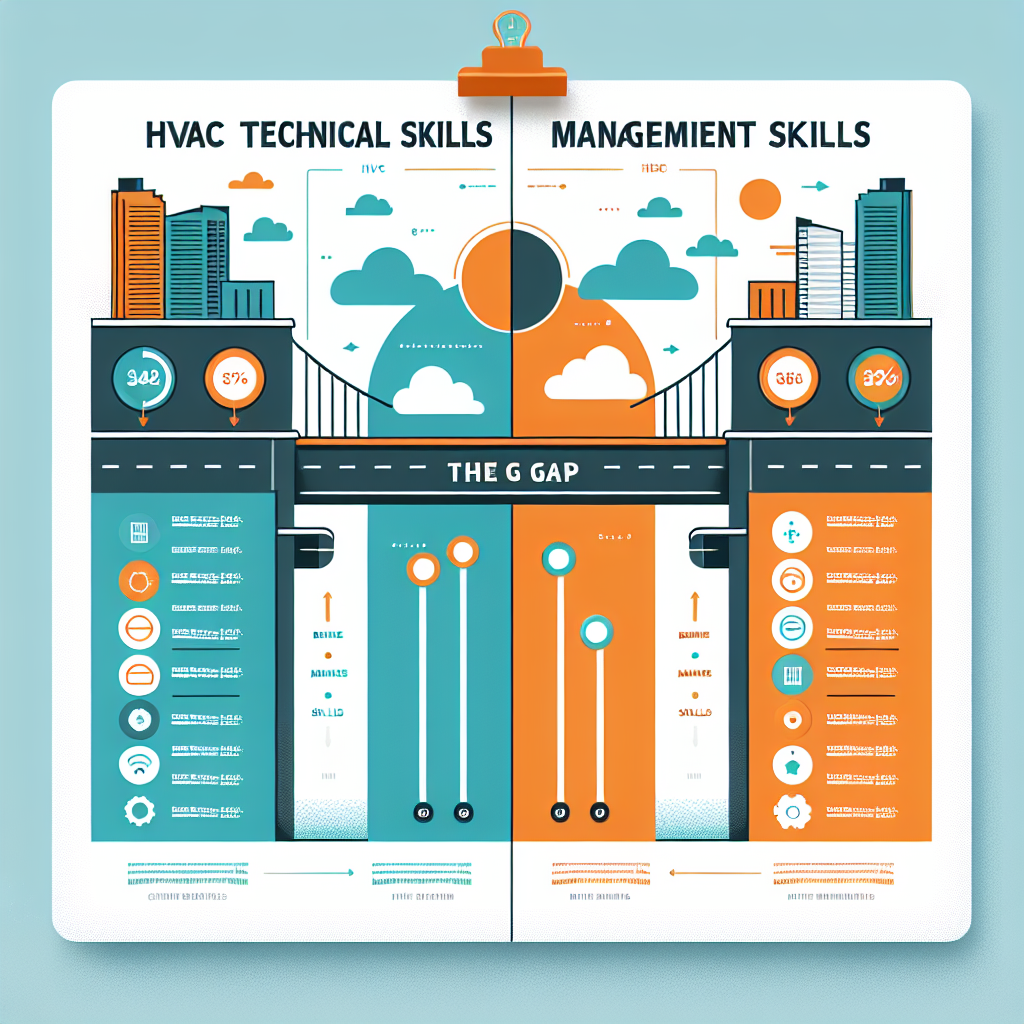
Financial literacy. This is the big one. You need to understand the difference between cash flow and profit. You need to know what SDE means — that's Seller's Discretionary Earnings, and it's how most HVAC businesses under $5 million are valued. An HVAC company doing $2.5 million in revenue with an SDE of $350,000 will typically sell for 2.5× to 3.5× SDE, putting the price somewhere between $875,000 and $1,225,000. Those multiples shift based on geography, customer mix, workforce stability, and a dozen other factors we'll cover in Chapter 4.
You also need to be able to read a P&L statement and a balance sheet. Not at CPA level — but well enough to spot when something doesn't add up. Can you tell the difference between a company that's genuinely profitable and one that looks profitable because the owner hasn't been paying themselves? Can you identify whether that $180,000 in "owner perks" the broker is adding back to SDE is legitimate or inflated? These aren't abstract questions. They're the difference between a good deal and a catastrophe.
People management. Your top install tech makes $32/hour. He's been with the company for eleven years. He knows every customer on the east side of town by name. He also shows up late twice a week and undermines your new service manager at every opportunity. What do you do?
If your gut reaction is "fire him" or "just deal with it," neither answer is good enough. Ownership means navigating situations like this every single week. It means hiring, training, giving performance reviews, handling workers' comp claims, and having the conversation nobody wants to have when a twenty-year employee's work quality starts slipping.
Sales and marketing. You might be the best technician in your market. Nobody cares if they can't find you. Do you know what it costs to acquire a new customer? In most residential HVAC markets, that number runs between $150 and $350 through paid search, and $45 to $80 through organic and referral channels. Do you know what your customer lifetime value needs to be to make those numbers work?
Operational systems. Dispatching, inventory management, fleet maintenance, warranty tracking, service agreements — the company you buy will have systems for all of these. Some will be good. Some will be a spreadsheet held together with hope. You need the judgment to know which systems to keep, which to replace, and — critically — how to make changes without destroying what already works.
Key point: You don't need to master all of these before you buy. But you need to honestly assess where you stand in each area, because your gaps become your risk. A gap in financial literacy means you might overpay. A gap in people management means you might lose your best techs. Identify the gaps now, and you can build a plan to fill them.
Regulatory and compliance. HVAC is a licensed trade in every state, but ownership brings a layer of compliance that goes beyond your EPA 608 and state mechanical license. You'll be dealing with OSHA requirements, DOT compliance if your vans exceed weight thresholds, contractor licensing that may require a different class than your personal license, and local permitting relationships that can make or break your install timeline. If the company you're buying does commercial work, add prevailing wage requirements, bonding capacity, and mechanical plan review to the list.
Financial Readiness: An Honest Look at the Numbers
Here's where most aspiring buyers either get serious or get quiet. Let's talk real numbers.
The median HVAC business that changes hands in the United States does between $1 million and $3 million in annual revenue. At typical SDE margins of 12%–20% and multiples of 2.5×–3.5×, you're looking at purchase prices roughly between $300,000 and $2,000,000. The sweet spot for a first-time buyer — big enough to support an owner's salary, small enough to finance — is usually a company priced between $400,000 and $900,000.
Down payment. If you're financing through an SBA 7(a) loan, which is the most common path for first-time HVAC acquisitions, you'll need 10%–20% down. On a $650,000 deal, that's $65,000 to $130,000 in cash. Some SBA lenders will go as low as 10% if you have strong industry experience and the business has solid financials. Others want 20% and won't budge. Either way, this money needs to be seasoned — sitting in your accounts for at least 60–90 days before you apply. Borrowed down payments are a red flag for lenders.
Working capital reserve. Beyond the down payment, you need a personal cash reserve. The business should have its own working capital, but things go sideways during transitions. A major customer delays payment. An install crew quits en masse. A compressor shipment gets lost. I recommend having at least three months of personal living expenses plus $30,000–$50,000 in accessible funds you can inject into the business if needed. This is your "sleep at night" money.
Credit profile. SBA lenders want to see a personal credit score above 680. Above 700 is better. Above 720, and you're in strong territory. They'll also look at your personal debt-to-income ratio. If you're carrying $600/month in car payments, $2,200 in mortgage, and $400 in student loans, that's $3,200 in personal debt service before the business loan. The lender will stress-test whether your projected owner's draw from the business can cover that plus the new loan payment plus a margin of safety.
Key point: Start cleaning up your credit and reducing personal debt at least 12 months before you plan to make an offer. Pay down credit cards below 30% utilization. Don't open new accounts. Don't co-sign anything. Your personal financial profile is essentially your loan application — start treating it that way now.
Spouse or partner alignment. I almost didn't include this because it's not a "financial" metric, but in practice it's the most important financial conversation you'll have. If you have a spouse or partner, they need to understand what's about to happen. The down payment might come from savings you built together. The first year will almost certainly mean a lower take-home than your current W-2 job. There may be a personal guarantee on an SBA loan, which means your house is on the line.
I've seen at least four deals die because the buyer's spouse found out the details after the LOI was signed. And I've seen two marriages end within eighteen months of acquisition, not because the business failed, but because nobody had the conversation up front. Have the conversation.
- I have at least $65,000–$130,000 available for a down payment (seasoned 90+ days)
- I have 3+ months of personal living expenses in reserve, separate from the down payment
- My personal credit score is 680 or above
- My personal debt-to-income ratio allows room for a business loan payment
- My spouse/partner understands the financial commitment and is aligned
- I have $30,000–$50,000 in accessible emergency funds for the business
The Lifestyle Reality Check
Right now, you clock out. Maybe not at 5:00 sharp, but at some point your day ends and someone else's problem becomes someone else's problem. That changes the day you sign the closing documents.
Let me walk you through what a typical week looked like for me during my first two years of ownership.
Monday. In the shop by 6:30 to review the dispatch board. Morning meeting with techs at 7:00. By 7:15 I'm on the phone with a supplier about a backordered condenser unit that was supposed to arrive Friday. My service manager calls in sick. I rework the schedule myself, which takes 45 minutes. I spend the late morning reviewing last week's financials — we came in $4,200 under projected revenue because two installs got pushed. Afternoon: a callback on a system we installed ten days ago. The customer is unhappy. I go out personally to diagnose and smooth things over. It's a warranty issue — bad TXV out of the box. I'm home by 7:30.
Tuesday. Payroll day. I spend two hours reconciling timesheets because one tech swears he worked a half-day Saturday and the GPS in his van says it never left his driveway. An applicant comes in for an interview — journeyman with eight years of experience, wants $34/hour. I need him badly but my labor budget says $30. We negotiate to $31.50 with a 90-day review. I spend the afternoon quoting a light commercial job — rooftop unit replacement for a strip mall. If I land it, it's $38,000 in revenue. If I underbid, I'll lose money on it.
Wednesday. Emergency call at 2 AM. Pipe burst in a mechanical room at a restaurant we service. My on-call tech handles it, but I'm awake for an hour coordinating. Normal day otherwise, except that "normal" means eight phone calls, two estimates, a parts run because our supplier shorted us on fittings, and a 45-minute conversation with my bookkeeper about why our accounts receivable has crept up to 47 days.
Thursday. I ride along on an install to evaluate a newer tech. He's good with his hands but doesn't talk to the customer at all. I make a mental note to add customer interaction to our training. Lunch meeting with a commercial property manager who could send us five rooftop replacements this year. Afternoon: my accountant calls about estimated tax payments. The number is $14,200. I knew it was coming but it still stings.
Friday. The install crew finishes a two-day job. I do the final walkthrough and sign off. My afternoon is supposed to be "office time" for planning, but instead I spend it dealing with a negative Google review from a customer whose $12,000 system is working perfectly but who's upset we couldn't start the job two days earlier. I write a professional response, then call the customer directly. They calm down. I leave the shop at 6:00 and try not to think about work until Monday. I fail.
I'm not telling you this to scare you off. I'm telling you because the people who succeed in this business are the ones who read that week and think, "Yeah, I can do that." Not “I’ll hire someone to do all that.” You might, eventually — there is a semi-absentee ownership model that works about half the time — but not in year one, and probably not in year two. In the beginning, you are the service manager, the sales team, the HR department, and the CFO. You need to be okay with that.
Some questions to sit with honestly:
- I'm willing to work 50–60 hour weeks for the first 1–2 years
- I can handle being "on call" mentally, even when I'm not on call technically
- I'm comfortable making decisions with incomplete information
- I can have difficult conversations with employees — about performance, attendance, or termination
- My family understands and supports the time commitment
- I can accept a temporary drop in income during the transition period
The Van Fleet Test
Here's a thought experiment I use with every prospective buyer I mentor. I call it the Van Fleet Test.

Close your eyes. Picture a parking lot with service vans in it. Your name is on the side of every van. Each van represents a technician on your payroll — their salary, their benefits, their training, their callbacks, their customer interactions, their vehicle maintenance, their tool inventory, their career development, and their Monday morning attitude.
How many vans can you picture before your chest gets tight?
If the answer is two or three, that's not a failure. It means you're probably suited for a smaller acquisition — a one-to-three tech operation where you're still turning wrenches part of the time. There are excellent businesses in that range, typically doing $400,000 to $1.2 million in revenue. The lifestyle is more hands-on but simpler. You know every customer. You know every job. The complexity is manageable.
If you can picture six to ten vans and feel excited rather than anxious, you might be ready for a larger operation — the $1.5 million to $3.5 million range. These companies have layers. You'll have a service manager, maybe an office manager, probably a dedicated install crew. You're not on the tools anymore. You're managing managers, selling larger jobs, and thinking about systems and scalability.
If the thought of fifteen or twenty vans excites you, I'd suggest starting with six to eight anyway and growing into it. The skills that manage a twenty-van operation are built, not born. And the cost of learning those skills on a $4 million acquisition is dramatically higher than learning them on a $1.5 million one.
Key point: The Van Fleet Test isn't about ambition. It's about honest self-knowledge. A two-van owner who's clear-eyed about their capacity will outperform a ten-van owner who's in over their head every single time. Buy the business that matches who you are today, not who you hope to become in five years.
There's a subtlety here that's worth calling out. The number of vans you can picture comfortably isn't just about management skill. It's about what kind of problems you want to solve every day.
At two to three vans, your problems are technical and customer-facing. The compressor is short-cycling. Mrs. Henderson wants a quote for a mini-split in her addition. The new guy needs help brazing. These are concrete problems with concrete solutions.
At six to ten vans, your problems become systemic. Callbacks are trending up this quarter — is it a training issue, a parts issue, or a hiring issue? Your cost per lead on Google Ads jumped from $48 to $71 — what changed? Your best tech is threatening to leave for a competitor offering $3/hour more — do you match it, counter with something else, or let him go?
At fifteen-plus vans, your problems are strategic. Should you open a second location? Is it time to add plumbing or electrical to the service mix? A private equity group just approached you about a platform deal — what's your exit timeline?
All three scales can be excellent businesses. All three can support a comfortable living. But they require fundamentally different people. Know which one you are before you start shopping.
Your Self-Assessment Scorecard
I've thrown a lot at you. Let's bring it together into something actionable. Below is a comprehensive self-assessment. Don't rush through it. Don't give yourself credit for "close enough." The only person this exercise helps or hurts is you.
Technical Readiness
- I hold a current EPA 608 Universal certification
- I have 5+ years of hands-on HVAC experience (residential, commercial, or both)
- I can evaluate the quality of an HVAC installation by walking a job site
- I understand current equipment lines and can spot outdated or underperforming inventory
- I know the going rates for common repairs and installs in my market
Business Knowledge
- I can read and interpret a Profit & Loss statement
- I understand what SDE is and how it's used to value a business
- I have experience managing people (even informally — leading a crew counts)
- I understand basic marketing concepts — cost per lead, customer lifetime value, conversion rates
- I have a plan to fill my knowledge gaps (courses, mentors, advisors, or partners)
Financial Readiness
- I have sufficient capital for a 10%–20% down payment on my target acquisition size
- I have personal reserves covering 3+ months of living expenses
- My credit score is 680+ (ideally 720+)
- My debt-to-income ratio can absorb a business loan payment
- I have an emergency fund ($30K–$50K) I can inject into the business if needed
- My spouse/partner is informed and supportive of the financial risk
Lifestyle and Mindset
- I'm prepared for 50–60 hour work weeks in the first two years
- I can handle ambiguity and make decisions without perfect information
- I'm willing to do every job in the business until I can hire someone to do it
- I can have hard conversations — firing underperformers, confronting dishonesty, saying no to friends
- I've taken the Van Fleet Test and I'm honest about my capacity
- My motivation is building something long-term, not escaping a bad job
How to score yourself. Count the items you checked honestly. Don't include the ones you're "working on" — only the ones that are true today.
20–23 checks: You're in strong shape. Move on to Chapter 2 and start looking at the market.
14–19 checks: You have a real foundation but identifiable gaps. Write down the unchecked items. For each one, decide: can I close this gap in 6 months? If yes, set a timeline and get to work. If no, you need a partner, advisor, or hire who covers that gap.
8–13 checks: You're not ready yet, and that's genuinely okay. Most successful buyers spent 12–24 months in preparation before they made their first offer. Use this scorecard as your roadmap. Focus on the financial readiness items first — those have the longest lead time.
Under 8 checks: Buying an HVAC business may not be the right path right now. That doesn't mean it's never the right path. It means you have foundational work to do first. Consider getting experience in a management role at an existing HVAC company. Learn the business side while someone else is paying you to learn it. That might be the highest-ROI move you can make.
Key point: This scorecard isn't a gate. It's a mirror. The worst thing you can do is look at it, see the gaps, and ignore them. The best thing you can do is look at it, see the gaps, and build a plan. Every successful HVAC business owner I know started with gaps. The ones who made it are the ones who were honest about them.
One more thing before we move on. I said at the top that the difference between successful buyers and unsuccessful ones is self-awareness. That's true, but it's incomplete. The full truth is: self-awareness plus action. Knowing you have a gap in financial literacy means nothing if you don't pick up a book, take a course, or find a mentor. Knowing your credit score is 650 means nothing if you don't start the work of getting it to 700.
This chapter asked you to be honest. The rest of this guide asks you to be active. If you're ready, let's talk about how to find the right company.