

You don't need a bank to buy an HVAC company. In a lot of deals — especially the ones under $2M — the seller is the bank. They carry a note, you make payments, and everybody avoids the three-month SBA paper shuffle. Here's how it works, when it makes sense, and where people blow it up.
You've found the company. Maybe you've been running calls for them for five years. Maybe you spotted it on BizBuySell between a laundromat and a vape shop. Either way, you want to buy it, and the financing question is staring you in the face.
Traditional lenders want collateral you don't have. SBA loans work but take forever and come with guardrails that make your head spin. And the seller — the person who actually owns this thing — just wants to retire to a lake house and stop answering emergency calls at 2 a.m.
That misalignment is actually your opening. Because when the seller carries the note, both sides can get what they want faster and with fewer middlemen.
Why the Owner's Wallet Might Be Your Best Lender
Seller financing closes more HVAC deals than most people realize. Industry brokers estimate that 40–60% of HVAC acquisitions under $2M involve some form of owner carry. For internal buyouts — where a lead tech or service manager buys the company from their boss — that number is closer to 80%.
Why would a seller voluntarily become your lender? Three reasons, and none of them are charity.
Tax advantages through installment sales
When a seller takes a lump sum at closing, they pay capital gains tax on the full amount that year. If they've built the business from nothing to $1.5M in value, that's a serious tax hit.
An installment sale — which is what seller financing creates — spreads that gain across the payment period. Seller receives $250K a year for six years instead of $1.5M all at once. Their accountant sends them a thank-you card.
Higher effective price
Interest is the seller's bonus. If they carry a $1M note at 7% over six years, they collect roughly $225K in interest on top of the purchase price. That's real money. Many sellers will accept a slightly lower sticker price knowing the interest makes them whole — and then some.
Faster close, fewer complications
No bank underwriting. No SBA environmental questionnaire about whether someone buried a drum of R-22 behind the shop in 1997. Seller financing can close in 30–45 days. SBA deals routinely take 90–120.
For buyers, the math is equally compelling
Lower down payment. Flexible terms. And here's the big one: a seller who finances part of the deal has skin in the game. They want you to succeed because your success is their monthly payment. That alignment matters more than people give it credit for.
The awkward version: If the seller is your current boss, this entire conversation gets loaded with dynamics that have nothing to do with finance. We'll cover that in its own section below. For now, know that internal buyouts with seller financing are the single most common way HVAC companies change hands. Your situation is not unusual.
How Seller Financing Actually Works
Strip away the jargon and here's what's happening: the seller acts as the bank. At closing, instead of receiving the full purchase price in cash, they receive a promissory note — a legal IOU with teeth. You make monthly payments to them, with interest, until the note is paid off.
That's it. That's the mechanic. Everything else is just details about how much, how long, and what happens if somebody doesn't hold up their end.
Common deal structures
100% seller-financed. The seller carries the entire purchase price. You put down 10–20%, and the seller holds a note for the rest. Cleanest structure. Works best when the seller trusts the buyer — which is why it's most common in internal buyouts.
SBA loan + seller note. The bank covers 70–80% of the purchase price through an SBA 7(a) loan. The seller carries a note for 10–20%. You bring 10% equity. This is the standard structure for deals over $1M where buyer and seller don't have a prior relationship.
Seller note + earnout. Part of the price is a standard note with fixed payments. Another piece — usually 10–15% of total — is contingent on the business hitting performance targets after the sale. More on earnouts below.
Typical terms for HVAC deals
These are not universal, but they represent the middle of the market for HVAC acquisitions in the $500K–$3M range:
- Down payment: 10–20% of purchase price
- Interest rate: 6–8% fixed (sometimes pegged to prime + 2–3%)
- Term: 5–7 years
- Payment frequency: Monthly
- Security: Second lien on business assets (behind SBA if applicable), sometimes personal guarantee
- Prepayment: Ideally no penalty, but some sellers negotiate a 1–2 year prepayment restriction
SBA 7(a) vs. Pure Seller Financing vs. Hybrid
| SBA 7(a) | 100% Seller Carry | SBA + Seller Note | |
|---|---|---|---|
| Down payment | 10–15% | 10–20% | 10% |
| Interest rate | Prime + 2.25–2.75% | 6–8% fixed | SBA rate + 6–8% on note |
| Term | 10 years | 5–7 years | 10 yr (SBA) / 5–7 yr (note) |
| Time to close | 90–120 days | 30–45 days | 90–120 days |
| Seller involvement | None after close | Ongoing as lender | Limited, via note |
| Paperwork | Substantial | Moderate | Substantial |
| Best for | Deals over $1.5M, no relationship | Internal buyouts, high trust | Larger deals, gap financing |
Important SBA note: If the seller note counts toward your equity injection, the SBA requires “full standby” on that note for 24 months. That means zero payments to the seller for two years. The seller needs to understand this going in, or the deal structure falls apart at underwriting. The 2026 rule updates also created a dual seller note strategy that lets buyers close with just 5% cash down.
Structuring the Deal for a Seasonal Business
Here's where HVAC gets specific, and where generic small-business acquisition advice falls flat.
HVAC revenue is seasonal. In most markets, you're running hot June through September, steady in heating season, and scraping by in the shoulders. A residential-heavy shop in Texas might do 40% of annual revenue in Q3 alone. A commercial-heavy outfit in Minnesota has a different curve, but it's still a curve.
Fixed monthly payments on a seller note don't care about your curve. January's $12,000 payment is the same as July's, but January's cash flow might be half of July's.
If you don't address this in the deal structure, you'll spend every slow season staring at your bank balance and wondering if you made a terrible mistake. You didn't — you just structured the note wrong.
Solution 1: Seasonal payment structure
Set higher payments during peak months and lower payments during slow months. The total annual obligation stays the same, but the cash flow pressure matches the business.
Example on a $600K note at 7%:
- June–September: $12,500/month
- October–December, March–May: $8,500/month
- January–February: $5,000/month
- Annual total: ~$105,000
This is not exotic. It's how the business actually works. Any seller who ran the company understands why this makes sense — they managed the same cash flow for 20 years.
Solution 2: Annual balloon payments tied to milestones
Instead of monthly payments, structure the note with smaller monthly minimums and an annual lump-sum payment tied to revenue or SDE milestones. You pay $5,000/month as a baseline, then true up at year-end based on how the business performed.
This works well when the business has unpredictable year-to-year performance — maybe they're adding commercial contracts and neither side knows exactly what year-two revenue looks like.
Solution 3: Revenue-based payments
The most flexible option: your monthly payment is a fixed percentage of gross revenue. The seller gets paid more when the business does well and less when it's slow. Typical range is 8–12% of monthly gross.
The upside: perfect alignment between cash flow and payments. The downside: sellers don't love the uncertainty, and you need clean, real-time reporting so they trust the numbers.
Which structure do sellers prefer?
In my experience, most sellers prefer the seasonal payment structure. It's predictable — they know what they're getting each month, even if the amounts vary. Revenue-based payments make them nervous because they can't control the business anymore. Annual balloons make them nervous because that's a long time to wait.
Start the conversation with seasonal payments. It's the easiest yes.
The Earnout: When Part of the Price Depends on Performance
An earnout is a portion of the purchase price that's only paid if the business hits agreed-upon targets after the sale. It's not a bonus. It's part of the price — just a conditional part.
When earnouts make sense in HVAC
The seller says the business is growing 15% a year. They've added three commercial maintenance contracts and a new construction relationship. The trailing twelve months look great.
You're not sure if that growth is sustainable or if the seller just had a hot streak. Fair concern.
Solution: structure the deal with 85–90% of the price as a fixed note and 10–15% as an earnout tied to continued growth. If the business actually grows like the seller claims, they get the full price. If it doesn't, you don't overpay for momentum that evaporated.
Choosing the right metric
Revenue is simple and hard to manipulate but doesn't account for profitability. A seller could juice revenue with low-margin work before exiting and leave you holding unprofitable contracts.
SDE (Seller's Discretionary Earnings) is a better measure of business health but requires agreement on add-backs. And if the seller isn't involved in calculating SDE post-close, disputes are almost guaranteed.
Customer retention works well for HVAC maintenance-contract businesses. If the seller has 400 residential maintenance agreements, you can tie the earnout to retaining 85% of them at 12 months. Clean. Measurable. Hard to dispute.
Each metric has traps. Revenue can be gamed. SDE invites arguments about add-backs. Customer retention ignores growth. Pick the one that addresses the specific risk you're trying to hedge.
The misaligned incentive trap
If the earnout is tied to revenue and the seller stays on as a “consultant” during the earnout period, they have every incentive to chase top-line growth at the expense of profitability. They'll say yes to every job, underbid to win work, and leave you with a bloated revenue number and razor-thin margins.
Define the metric carefully. Add guardrails. If it's revenue, set a minimum margin threshold. If it's SDE, agree on the calculation method in writing before close.
Keep earnout periods short — 12 to 24 months max. Longer earnouts create more opportunities for disputes and keep both parties entangled when they should be moving on. If you can't measure the seller's claims within two years, the metric is wrong.
Buying From Your Boss: The Internal Buyout Playbook
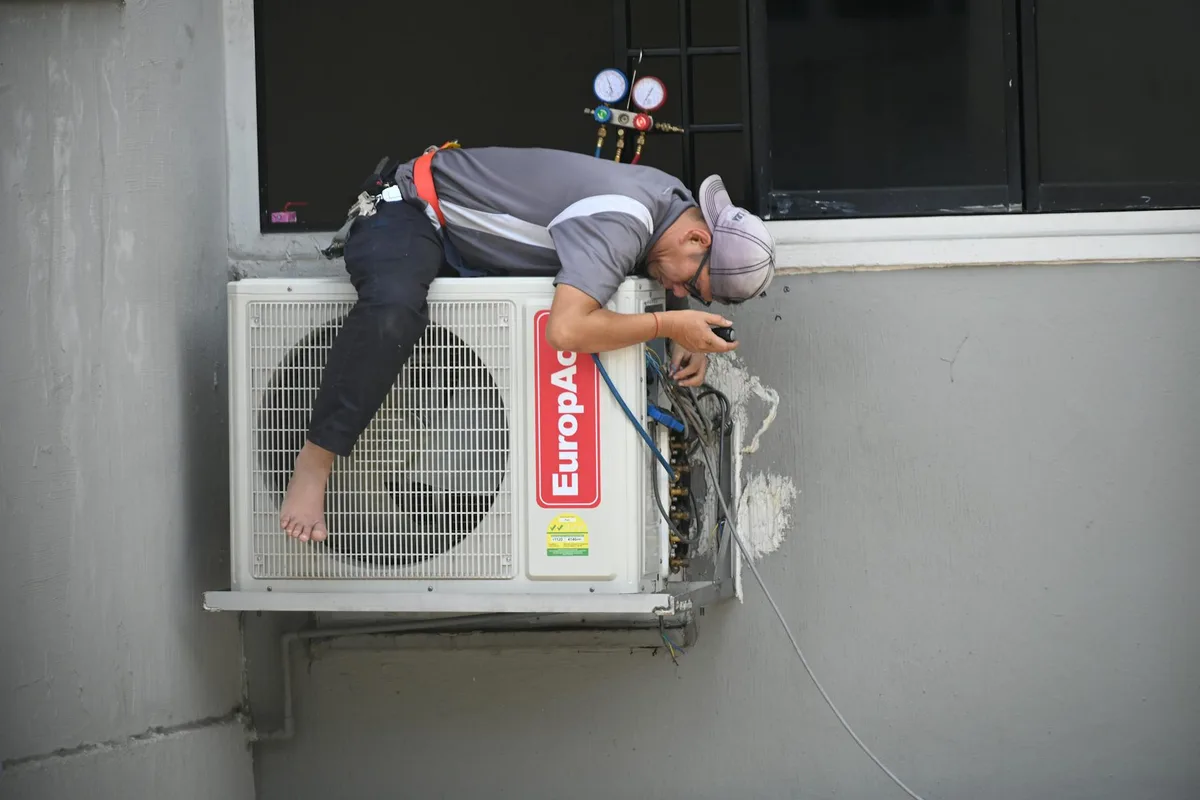
This is the most common path to HVAC business ownership. You've been running service, managing techs, maybe handling some sales. The owner is slowing down. You know the customers, you know the equipment, you know where the van keys are.
You also know this conversation could go sideways and cost you your job. So let's be precise about how to do it. (For the full five-phase playbook, see our dedicated guide: Buying Your Boss's HVAC Business.)
Have the conversation
Timing matters. Don't bring this up during a crisis, during peak season when everyone's slammed, or right after the owner made a major equipment purchase. The best time is during a natural planning conversation — annual reviews, business planning, or when the owner mentions retirement unprompted.
The script is simple: “I've been thinking about my future here, and I'd like to talk about whether there's a path for me to eventually take over the business. I'm not trying to push you out — I want to understand if that's something you'd consider, and what the timeline might look like.”
That's it. Don't bring numbers. Don't bring a letter of intent. This is a temperature check.
If they say no, you still have a job. If they say maybe, you have a starting point. If they say “I've been hoping you'd ask,” you have a deal to structure.
Independent valuation
Both sides need to agree on a number, and neither side should be the one to set it. Hire a business appraiser who knows HVAC or at minimum understands service businesses with recurring revenue. Organizations like SCORE can help connect you with valuation resources and mentors who have been through this process.
Expect to pay $3,000–$7,000 for a proper valuation. Split the cost with the seller. This is the cheapest insurance against a deal that falls apart over price disagreements.
HVAC businesses typically sell for 2–4x SDE, depending on size, customer concentration, recurring revenue percentage, and geography. A $400K SDE shop with 60% maintenance-contract revenue might command 3.5x. The same SDE with no contracts and all one-time work might get 2.2x.
Transition period
The seller needs to stay for 60–90 days post-close. Period. Customers need to hear from the previous owner that the new owner is the right person. Key commercial relationships need warm handoffs. The seller's knowledge about that one building downtown with the weird chiller setup needs to get out of their head and into your notes.
Define the role precisely. The seller is a consultant, not the boss. They introduce, they train, they hand off. They don't override your decisions, hire or fire people, or make promises to customers about pricing.
Put this in writing. “Advisory role, 20 hours per week, for 90 days” is different from “the seller hangs around indefinitely and second-guesses everything.”
Address the team
Your technicians knew you as a coworker yesterday. Today you sign their paychecks. That transition is weird for everyone.
Have a team meeting within the first week. Be honest about what's changing and what isn't. The answer, in most cases, is: “Almost nothing is changing right now. Same trucks, same routes, same pay. I'm going to run this the way [previous owner] ran it, because it works.”
Don't make big changes for 90 days. Don't rebrand. Don't change the dispatch software. Don't renegotiate supply house terms. Stability is your job for the first quarter.
License transfer
This one is non-negotiable and time-sensitive. In most states, the HVAC contractor's license is tied to a qualifying individual. If the seller is the qualifier on the company's license, their departure means the company can't legally pull permits.
You need your own license — or a qualifying employee — before the seller exits. In some states, the license transfer process takes 30–60 days. In others, you need to test independently.
Start this process before you close the deal. Not after. The day you discover your new company can't pull permits is a very bad day.
State-specific warning: License requirements vary wildly. Some states (Texas, Florida) have strict state-level licensing. Others defer to municipal or county requirements. Some require a separate business license in addition to the trade license. Check your state contractor board early and often.
Protections Both Sides Need in the Note
The promissory note is a legal document. It needs to be drafted by an attorney — not downloaded from LegalZoom, not scribbled on a napkin at the supply house, and not based on a template your brother-in-law used for his landscaping business.
That said, here's what should be in it.
Buyer protections
Interest rate cap. If the note has a variable rate, cap it. “Prime + 3%, not to exceed 9%” protects you from rate spikes turning a manageable payment into a chokehold.
Prepayment without penalty. You want the right to pay off the note early if the business crushes it or you refinance with a lender at a lower rate. Some sellers resist this because they want the interest income. Negotiate hard here — prepayment flexibility is worth a lot.
Clear default definition. “Default” should mean something specific: payment more than 30 days late, failure to maintain insurance, bankruptcy filing. Not “the seller feels like the business is being mismanaged.” Vague default triggers are weapons.
Cure period. If you do default, you should have 15–30 days to fix it before the seller can accelerate the note or take other action. Life happens. A late payment because your biggest customer paid 45 days late is not the same as you looting the business.
Seller protections
Personal guarantee. The seller will want one. You're asking them to trust a business entity you now control with a six-figure obligation. The personal guarantee says you're personally on the hook if the business can't pay. This is standard. Don't fight it.
Security interest. The seller should have a lien on business assets — equipment, vehicles, customer lists, inventory. If an SBA loan is in the stack, this will be a second-position lien. That's fine. It gives the seller recourse if things go badly.
Quarterly financial reporting. The seller has a right to see how their collateral is doing. Agree to provide quarterly P&L statements and balance sheets. This is reasonable and shouldn't be controversial. If it makes you uncomfortable, ask yourself why.
Default consequences. Some notes include a provision where, if the buyer defaults, the seller's non-compete is void. This is aggressive but logical from the seller's perspective — if you can't pay them, they shouldn't be barred from working. Negotiate the specifics carefully.
The non-compete clause
The seller needs a non-compete. This is non-negotiable from the buyer's side.
Typical terms for HVAC: 3–5 years, 25–50 mile radius, covering residential and commercial HVAC service. The scope should match the business you're buying. If the company only does residential, the non-compete doesn't need to cover commercial, and vice versa.
Watch for carve-outs. “I just want to do a little consulting” is how a seller ends up calling your customers and offering to undercut your prices. The non-compete should be clean, broad enough to protect the business, and enforceable in your state.
Get a lawyer. I've said it once but it bears repeating. The promissory note, security agreement, non-compete, and transition plan should all be drafted or reviewed by an attorney who handles business acquisitions. Not your divorce lawyer. Not your real estate attorney. A business acquisition attorney. Expect to spend $5,000–$10,000 on legal for a seller-financed deal. It's the best money you'll spend in the entire transaction.
The Bottom Line
Seller financing isn't a consolation prize for buyers who can't get a “real” loan. It's a legitimate, common, and often superior deal structure for HVAC acquisitions — and when you're exploring all your capital options, it deserves a seat at the table — especially under $2M, especially for internal buyouts, and especially when the seller wants tax advantages and ongoing income. If you’re considering going all-in without a bank, read our full seller-carry deal structure guide for the complete 100% seller-financed playbook.
Structure it right: seasonal payments, reasonable interest, clear protections on both sides, and a transition plan that doesn't leave the business in limbo.
Structure it wrong — handshake deals, vague terms, no non-compete, no lawyer — and you've built your new career on a foundation of future lawsuits.
The seller built something worth buying. You're building something worth owning. The note is just the bridge between those two things. Make sure the bridge has guardrails.